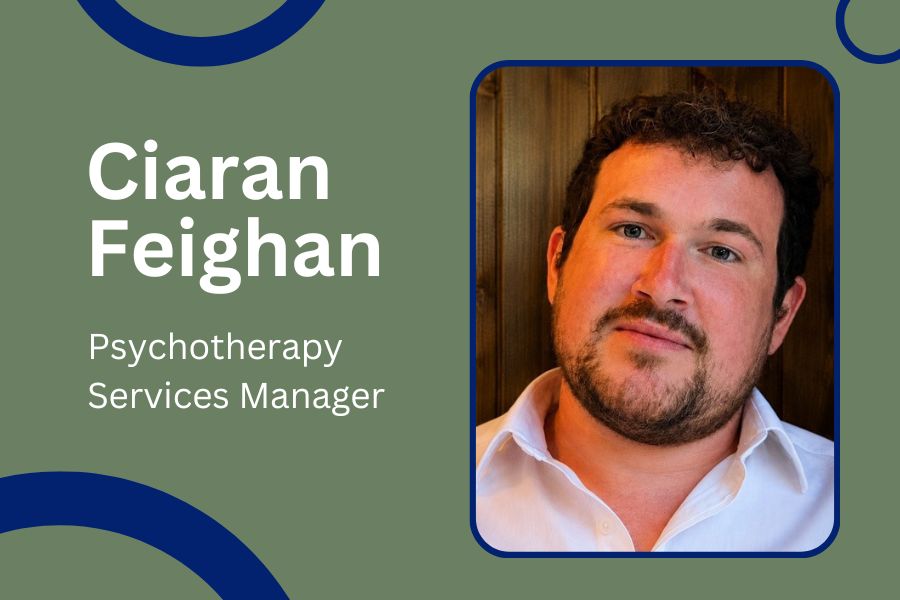
This summer we were delighted to welcome Ciaran Feighan to Respond as our Psychotherapy Services Manager. We wanted to properly introduce Ciaran by asking a few questions about his motivation for joining Respond and what meaningful support for survivors means to him.
What inspired you to join Respond?
Throughout my career, I’ve been passionate about making therapeutic services accessible to people who have experienced trauma and adversity. When I learned more about Respond’s specialist work with survivors with learning disabilities and autistic people, it was clear that this was an organisation whose values closely aligned with my own.
What particularly drew me to Respond was its commitment to adapting therapeutic support to individual need, recognising that recovery is different for everyone.
As a Dramatherapist, I’ve observed how creative and relational approaches can help people process experiences that may be difficult to express through language alone, and I was excited by the opportunity to contribute to an organisation where those principles are embedded throughout the service.
I was also attracted by Respond’s commitment to collaborative working in partnership with other organisations, bringing together their expertise to provide coordinated, specialist support for survivors while preserving the unique strengths of Respond’s service offer.
Throughout my career, I’ve been passionate about making therapeutic services accessible to people who have experienced trauma and adversity.
What are you most looking forward to about being part of the team?
I value working alongside such an experienced and passionate group of colleagues who share a commitment to delivering high-quality, trauma-informed care.
In my role as Psychotherapy Services Manager, I’m excited to continue developing services that are responsive to survivors’ needs while working collaboratively with colleagues at Respond and our partner organisations.
I’m also passionate about supporting therapists to thrive in their work through strong clinical leadership, reflective practice, and creating environments where both staff and survivors feel supported.
For me, meaningful support begins with feeling genuinely heard, understood and emotionally safe.
What does meaningful support for survivors look like to you?
For me, meaningful support begins with feeling genuinely heard, understood and emotionally safe. Trauma can have a profound impact on how people experience relationships, trust and communication, so creating a therapeutic environment where survivors feel respected, believed and empowered is fundamental.
Meaningful support also means recognising that there is no single pathway to recovery. It requires flexibility, curiosity and a willingness to adapt our approaches to each person’s strengths, communication style and individual experiences.
As services, we also have a responsibility to work together. By building strong relationships with our wider partners, we can reduce barriers to accessing support, strengthen pathways between services, and ensure survivors receive the most appropriate support.